A quality engineer sits in a supplier audit meeting. The vendor team walks through their corrective action for a batch of parts that failed incoming inspection — Rockwell hardness readings came in at 58 HRC instead of the specified 62 HRC. They discuss root cause, adjusted heat treatment parameters, and a revised PPAP timeline.
Three weeks later, the next shipment fails again. Same issue. The corrective action was documented in someone’s notebook, but the specific temperature adjustments and hold times discussed in that meeting never made it to the shop floor.
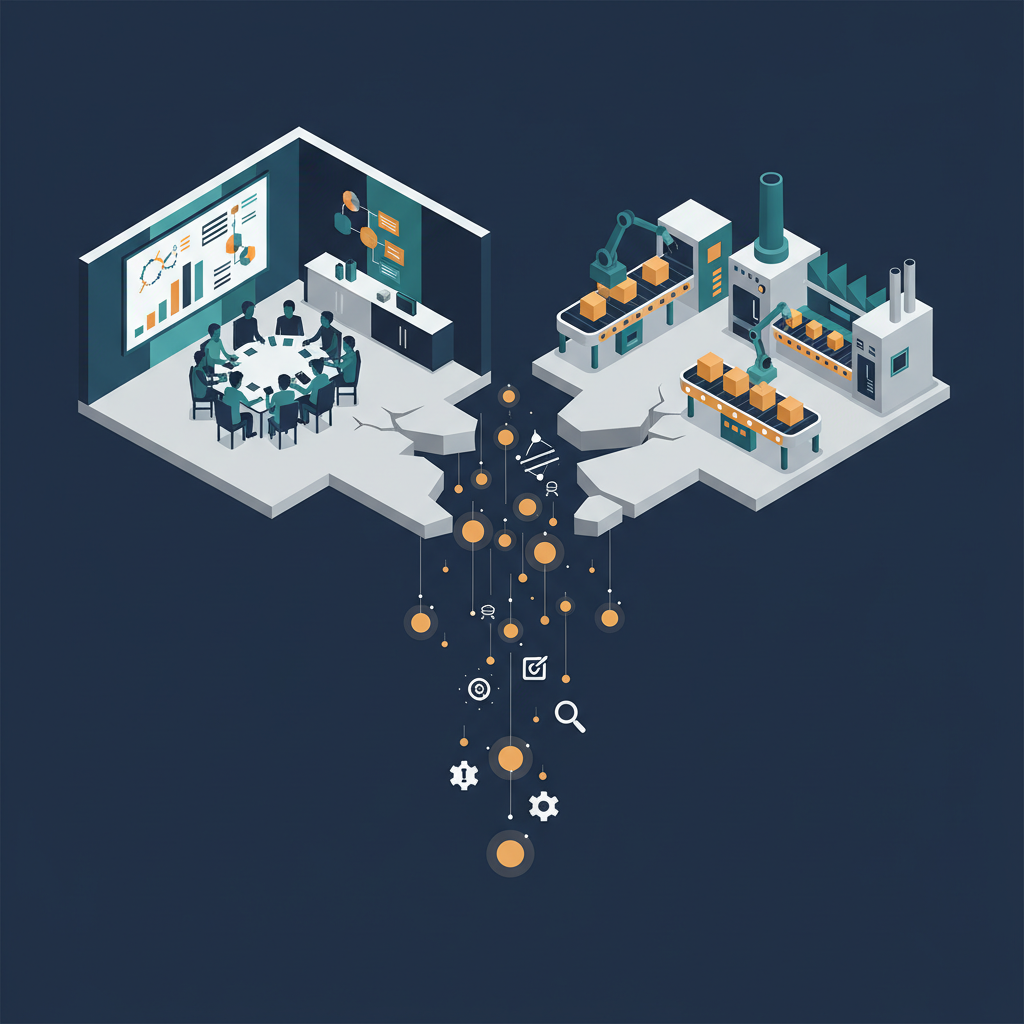
This is the quality escape problem. Not a failure of engineering, but a failure of information transfer. In manufacturing, the gap between what gets discussed and what gets documented costs real money — in scrap, rework, delayed shipments, and customer complaints.
The Documentation Gap in Manufacturing
Manufacturing runs on precision. A Cpk value of 1.33 means something specific. An FMEA severity rating of 8 triggers specific actions. But the meetings where these numbers get discussed — supplier audits, design reviews, corrective action boards, production handoffs — are still documented the old way: handwritten notes, half-remembered action items, and meeting minutes that arrive three days late.
The result is predictable. Technical details get lost. Specifications discussed verbally never make it into formal documentation. And when something goes wrong, there is no searchable record of who said what, when, or why a particular decision was made.
Why Traditional Approaches Fail
- Meeting minutes by committee. Someone takes notes while also trying to participate in a technical discussion about dimensional tolerances and material certifications. The notes capture the gist but miss the specifics that matter on the shop floor.
- Action item trackers. Great for tracking who owes what by when. Terrible at capturing the technical context behind why an action was assigned. Six months later, nobody remembers the reasoning.
- Generic transcription tools. Consumer-grade speech-to-text chokes on manufacturing vocabulary. When your transcription renders “Cpk” as “see peek” and “PPAP” as “peepap,” the output is worse than useless — it is actively misleading.
- Cloud-based meeting recorders. For companies dealing with proprietary processes, NDA-protected supplier data, or defense-adjacent work, sending audio to a cloud service that might use it for model training is a non-starter.
What Actually Works: Domain-Aware AI Transcription
The shift happening in manufacturing documentation is not about recording meetings — it is about capturing technical intelligence in a form that is searchable, attributable, and accurate.
Technical Vocabulary That Sticks
AmyNote uses OpenAI’s latest Speech API, which handles domain-specific terminology with surprising accuracy. Rockwell hardness, FMEA, Cpk values, PPAP submissions, GD&T callouts — these come through correctly because the model has been trained on technical content at scale.
Speaker Identification Across Sessions
In a supplier audit with six people around the table, knowing who committed to what matters. AmyNote’s speaker identification tracks voices across meetings, so when you search for “who discussed the heat treatment parameters,” you get an answer with a name attached.
AI-Powered Search and Summaries
Powered by Anthropic’s Claude Opus, AmyNote generates structured summaries that pull out action items, technical specifications discussed, and decisions made. More importantly, it enables semantic search across all your meeting transcripts. Six months after that supplier audit, you can search “heat treatment corrective action” and find the exact discussion.
Privacy Built for Manufacturing
Both OpenAI and Anthropic contractually guarantee zero training on user data. Audio is encrypted in transit; processing copies may be retained to deliver and recover requested features. Transcripts are stored locally on the user’s device with encrypted transport. Cloud processing copies are handled under the controls described in AmyNote’s Privacy Policy.
Getting Started
AmyNote combines OpenAI’s Speech API for transcription with Anthropic’s Claude Opus for AI analysis — both with contractual zero-training guarantees. It works for in-person meetings, not just video calls, and supports 120+ languages for international supplier discussions.
Try it free for 3 days at amynote.app — no credit card required.
Originally published as an X Article.