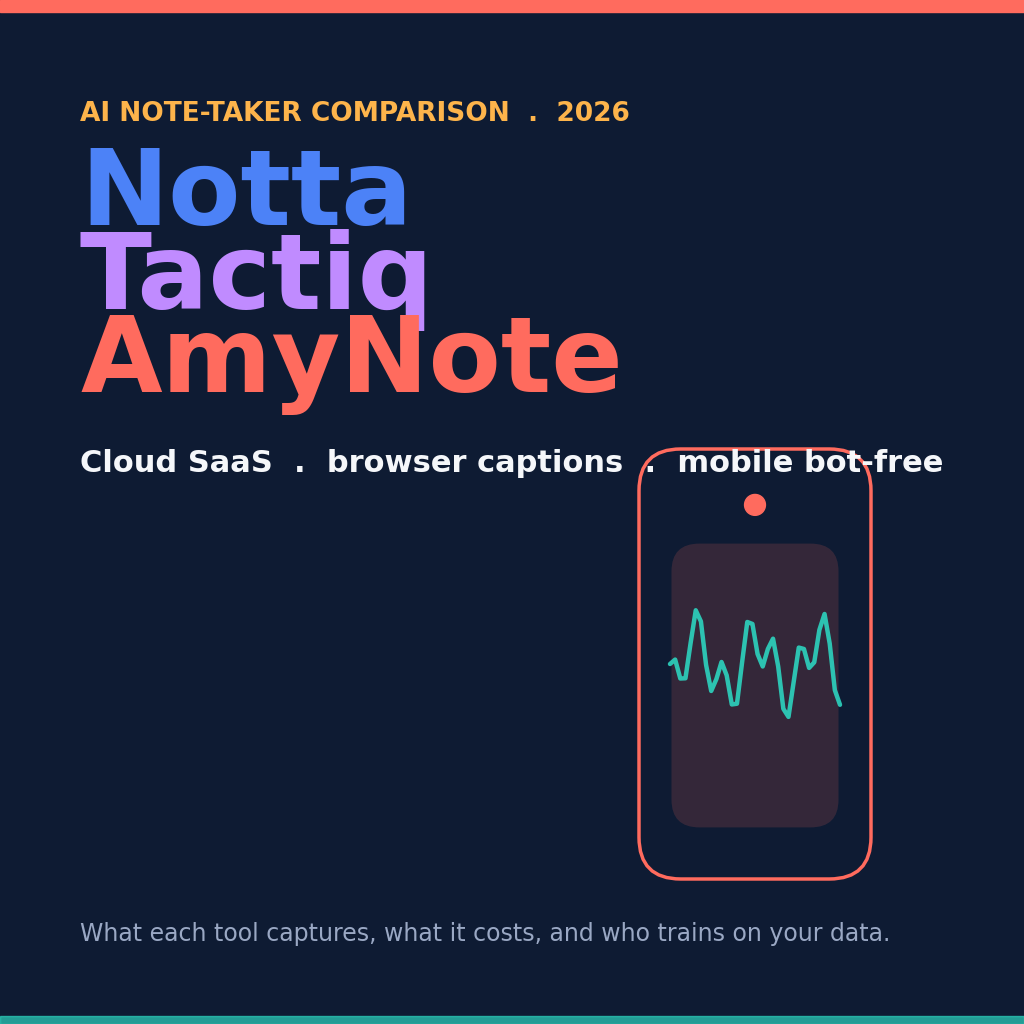
Three tools promise to turn your conversations into clean, searchable notes. They go about it in three completely different ways, and the difference is not a feature-list detail. It decides which meetings you can capture at all. Notta records audio in the cloud and sells a pocket recorder to go with it. Tactiq never records audio; it quietly reads the captions your video call already generates. AmyNote ignores the desktop entirely and captures the room from the phone in your hand. Pick the wrong model and no amount of AI polish saves the meeting you could not record. Here is how the three compare, checked against current vendor pages as of August 2026.
Quick Verdict
Notta if you want a mature multilingual cloud service with a matching hardware recorder, and you are comfortable with its default data policy.
Tactiq if nearly all your meetings are browser-based Google Meet, Zoom, or Teams calls and you want a zero-setup extension that never touches audio.
AmyNote if the conversations you keep losing happen in rooms, in the field, and in other languages, and you want them captured from your phone with nothing stored in a vendor's cloud.
What We Compared: Three Capture Models
Every AI note-taker has to answer one question first: how does the sound get in? That single choice cascades into privacy, portability, and which meetings are even possible. Everything else — the summaries, the search, the integrations — is downstream of it. Get the capture model wrong for your week and the polish on top never matters.
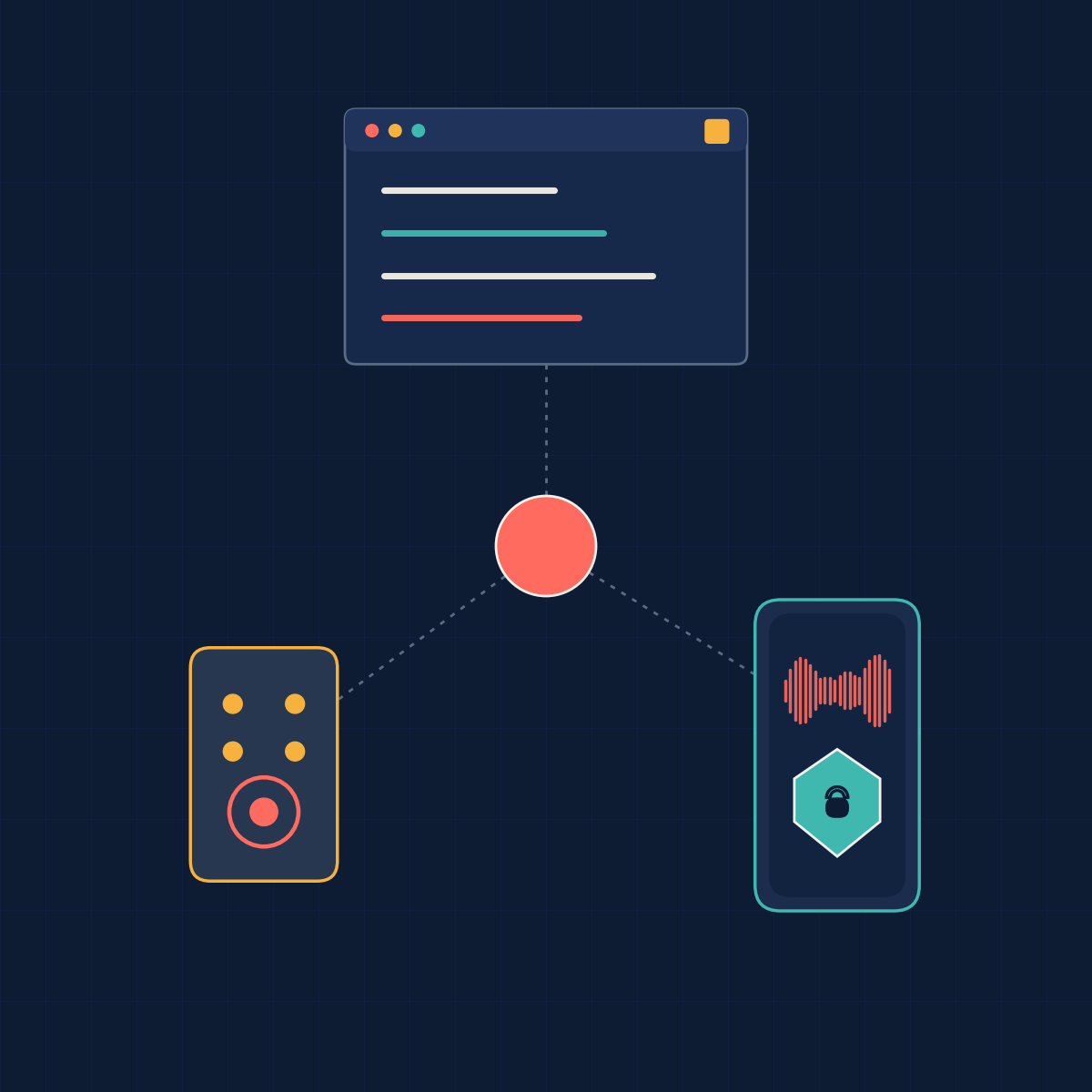
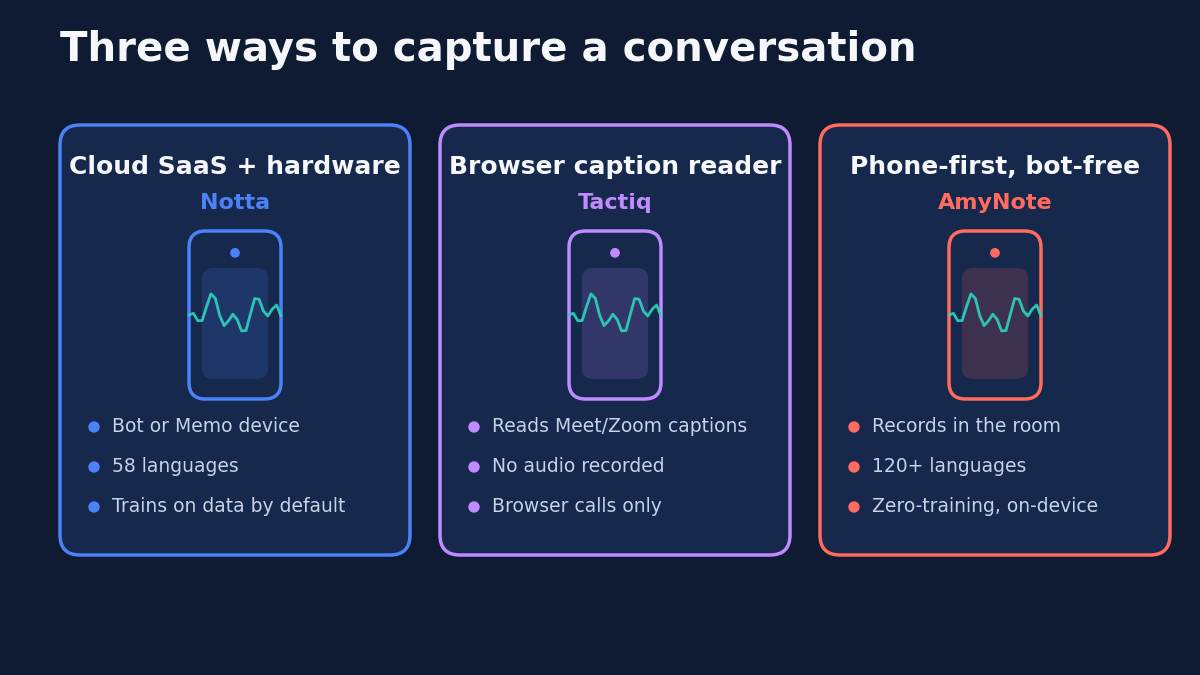
- Record the audio. Notta captures the actual sound, in the cloud for meetings or on its Notta Memo device for in-person talks. The most flexible model, but it means audio leaves your control.
- Read the captions. Tactiq takes a different route entirely. It reads the live captions a browser call already shows on screen and turns them into a transcript, so no audio is ever recorded or uploaded.
- Record the room, on the phone. AmyNote records the conversation physically around you, on the device already in your pocket, with no bot and no hardware.
Keep that framing in mind, because each tool's strengths and its hard limits both flow directly from its capture model.
Notta: Multilingual Cloud Service, With Hardware
Notta is the most conventional of the three: a cloud transcription service with polished mobile and desktop apps, a browser workflow for meetings, and an optional pocket recorder called Notta Memo for in-person capture that later syncs to your account.
Strengths. Broad coverage across form factors, transcription in 58 languages, and a useful hardware option for people who record in-person constantly. A newer Privacy Mode lets the desktop app record and transcribe supported meetings locally, without adding a bot to the call. It holds SOC 2 Type II, ISO 27001, and GDPR compliance — the enterprise checklist buyers look for.
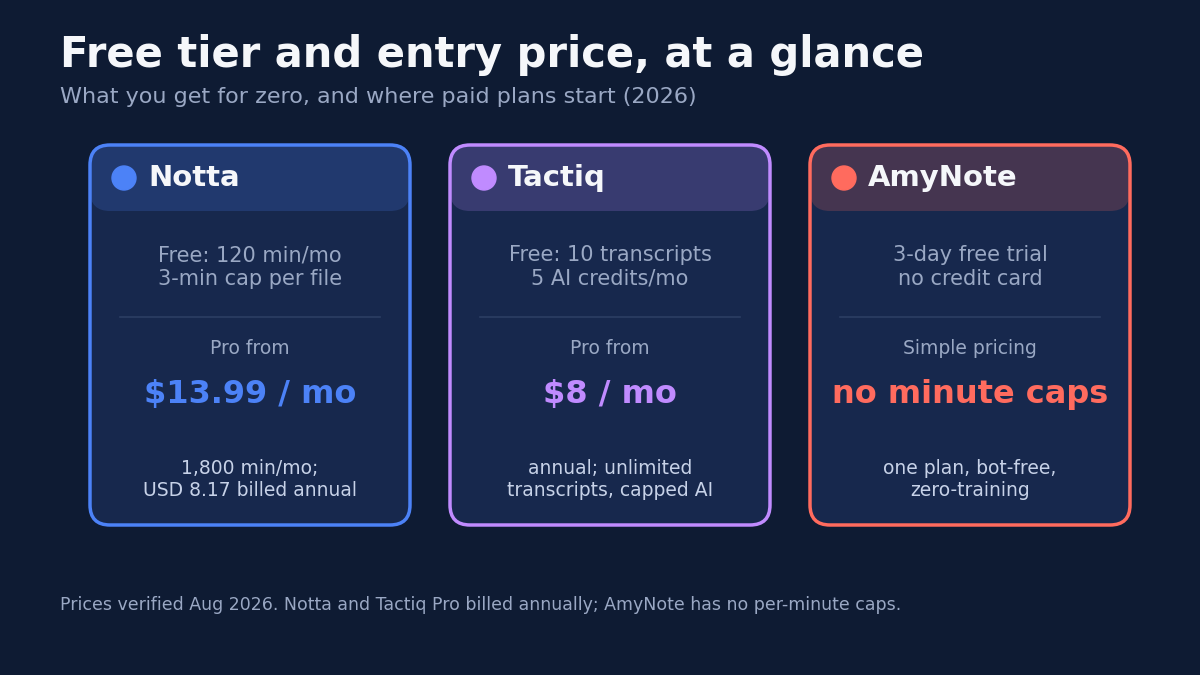
Weaknesses. The free plan is tight: 120 minutes per month with a 3-minute cap per file and 10 AI summaries per month, which is barely a demo. Pro runs $13.99 per month, or $8.17 billed annually, for 1,800 minutes and up to five-hour recordings. The bigger caveat is data: by default Notta uses Japanese-language user conversations to train its AI models, with no opt-out unless you pay for the Enterprise plan. Real-time translation and bilingual transcription are also sold as paid add-ons from $6 per month rather than included.
Tactiq: The Browser Caption Reader
Tactiq is a Chrome extension, with a Mac app, that lives inside your browser. When you join Google Meet, Zoom in the browser, or Teams in the browser, it reads the platform's own captions and assembles them into a structured, shareable transcript. It never records or stores audio.
Strengths. Zero setup and no bot in the participant list, because there is nothing to admit to the call. Audio never leaves the browser, and the transcript text is processed through OpenAI's Enterprise API, which does not train on that data. The free plan gives you 10 transcripts and 5 AI credits a month with no time limit, and Pro at $8 per month billed annually ($12 monthly) removes the transcript cap. Team is $16.67 per seat with unlimited AI credits.
Weaknesses. The caption model is also a cage. Tactiq only works where browser captions exist, so it cannot capture an in-person meeting, a phone call, or a desktop app call. Transcript quality is only as good as the platform's captions — if the caption engine mishears a name, that is what you keep, because there is no audio to check against. And the AI features run on credits: transcription keeps going, but summaries and insights pause once your monthly credits are spent, unless you jump to the Team plan.
AmyNote: Phone-First and Bot-Free
AmyNote starts from the phone instead of adapting to it. Open the app, press record, and it captures the conversation in the room around you, with no bot, no browser extension, no hardware, and no desktop to depend on.
Strengths. It covers the meetings the other two structurally miss: client sessions, site visits, interviews, and calls put on speaker in the room. Transcription runs through OpenAI's Speech API and analysis through Anthropic's Claude Opus, with 120+ languages and real-time translation included rather than sold separately. Speaker identification remembers voices across sessions, and both providers contractually guarantee zero training on user data, with transcripts stored locally under end-to-end encryption. A 3-day full trial needs no credit card.
Weaknesses. There is no desktop app, so a back-to-back day of scheduled browser calls is smoother in Tactiq. It runs no cloud bot, so it will not silently join a Zoom meeting on its own. There is no video recording, no CRM integration, and no team workspace yet, and it is a smaller brand than Notta. It does one job, mobile in-room capture, and does not pretend to do the rest.
Side-by-Side
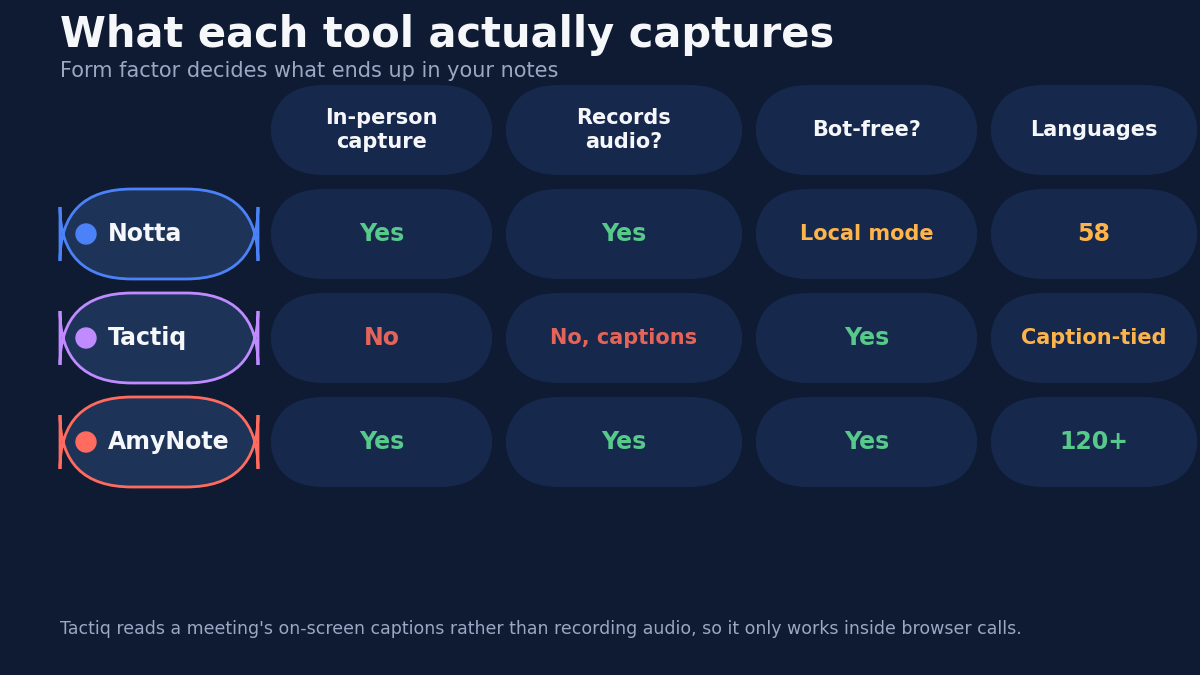
- In-person meetings: AmyNote is purpose-built for the room; Notta covers it through the phone app or the Memo device; Tactiq cannot do it at all.
- Browser video calls: Tactiq is the natural fit, reading captions with zero setup; Notta records them in the cloud or via Privacy Mode; AmyNote is not built for this.
- Records audio: Notta and AmyNote capture real audio. Tactiq never does, which is a privacy plus and a coverage minus.
- Languages: AmyNote leads with 120+ and included real-time translation; Notta offers 58 with translation as an add-on; Tactiq depends on each platform's caption languages.
- Paid entry: Tactiq $8 per month, Notta $13.99 per month or $8.17 annually, both per user. AmyNote keeps a simple plan with no per-minute caps.
- Privacy standard: Both OpenAI and Anthropic contractually guarantee zero training on user data. AmyNote stores transcripts locally with end-to-end encryption, while Notta trains on user conversations by default unless you reach Enterprise.
The Bottom Line
The three tools are not really competing on the same axis. Tactiq is the cleanest way to transcribe browser calls without ever recording audio, and if that is your entire meeting life, it is hard to beat for the price. Notta is the flexible multilingual service with hardware to match, best when you want one vendor across every surface and can accept its default data policy.
But if the meetings you keep losing are the ones away from a browser — in rooms and in the field and in other languages, captured from your phone with nothing left in a vendor's cloud — that is the exact shape AmyNote at amynote.app was built for, and the 3-day trial with no credit card makes the test cheap.
Originally published as an X Article by @AmyNoteApp.