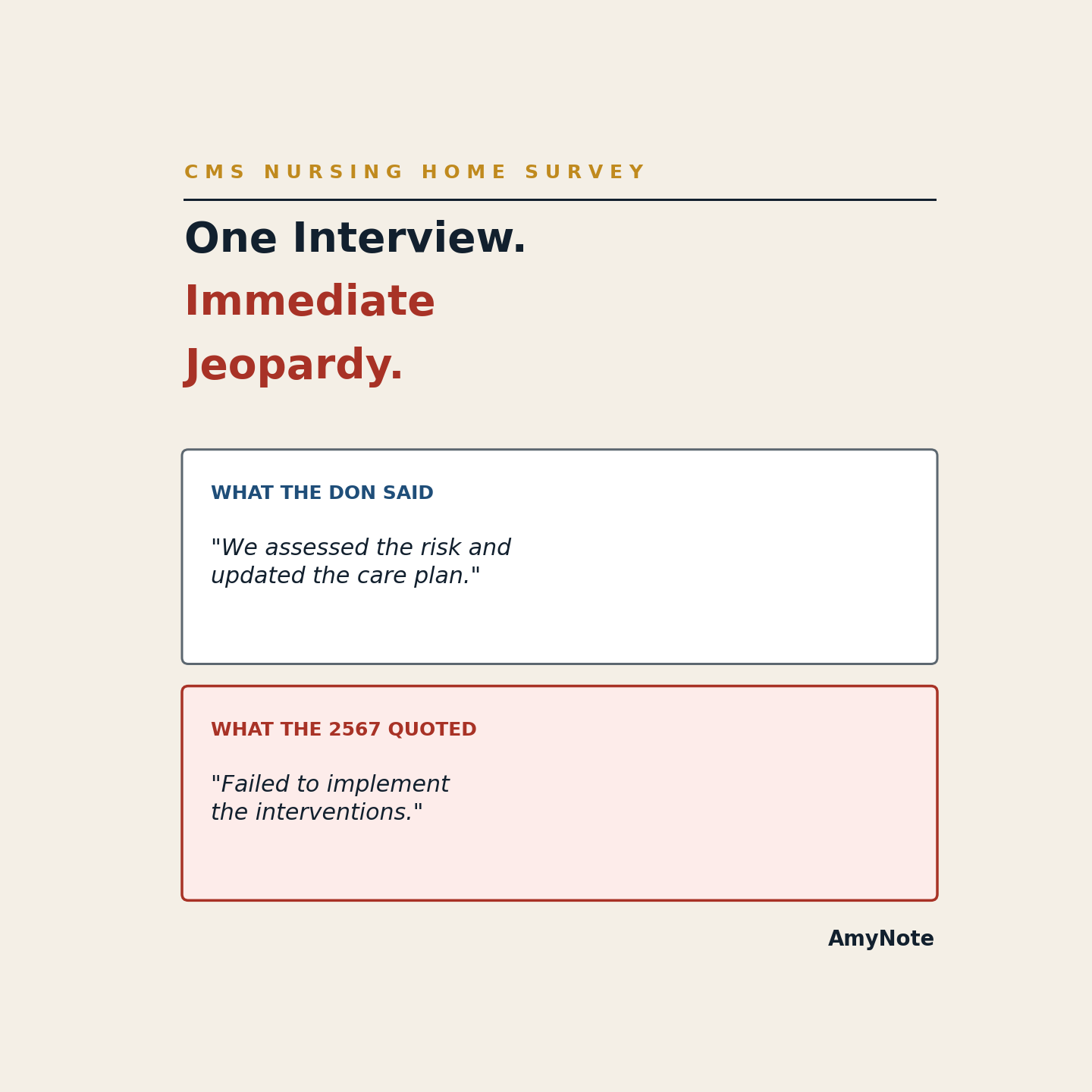
The survey team was on the floor for four days. Your director of nursing walked them through the fall-risk assessment, the care-plan updates, and the bed alarm that was in place the night of the incident. Everyone was professional; the questions were fair. Two weeks later the Statement of Deficiencies arrives, and it says your DON confirmed that staff failed to implement the fall interventions the care plan required.
Nobody on your team remembers it that way. But nobody can prove otherwise, because there is no transcript and no recording — only the surveyor's notes. And a note that reads like an admission is now the seed of a tag that will follow your facility into the next standard survey, your Five-Star rating, and any enforcement action that follows.
The Problem: A Survey Is Built on Conversations
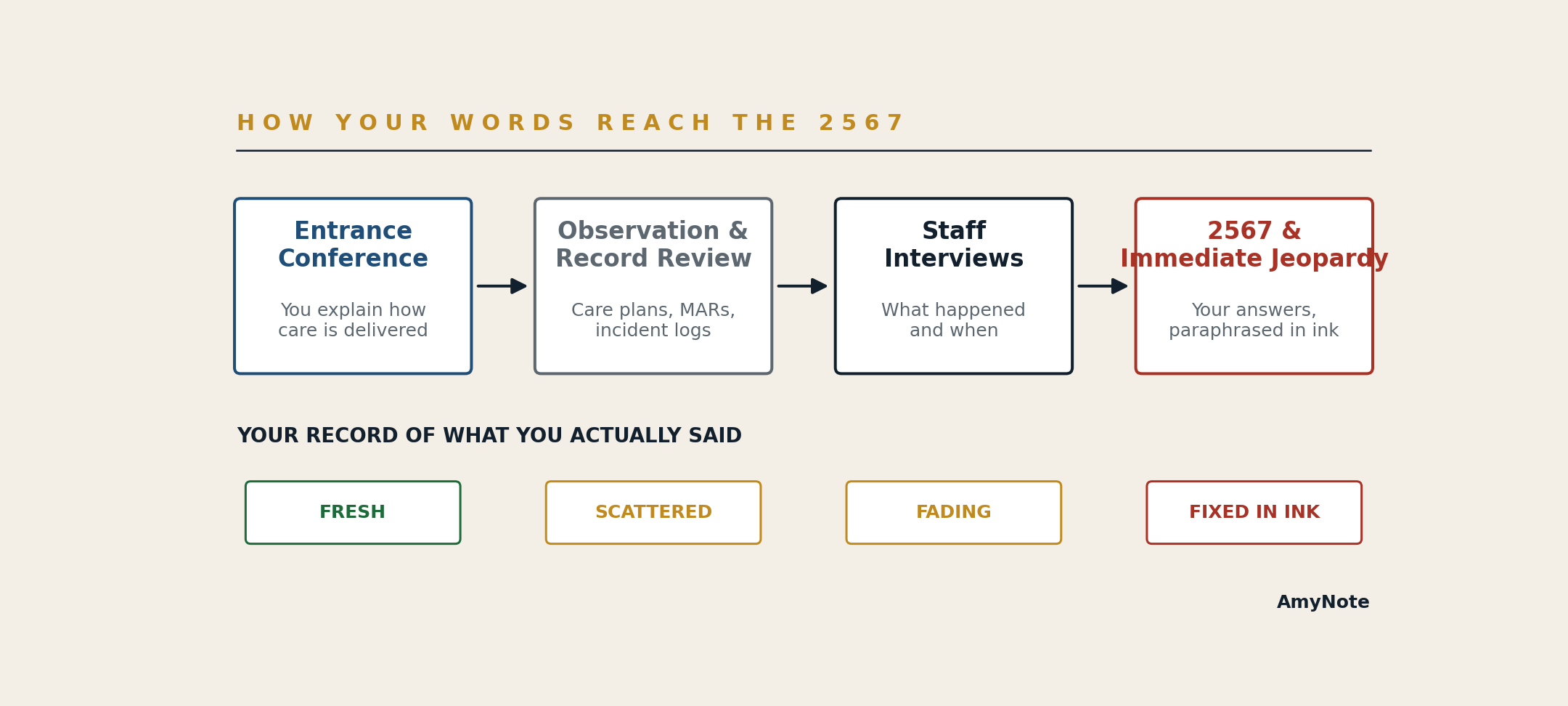
A CMS nursing home survey is built on conversations. Surveyors arrive unannounced, observe care, review the clinical record, and interview your director of nursing, floor nurses, CNAs, residents, and families about how care actually gets delivered. The questions get pointed fast: who assessed this resident, when was the care plan updated, and why was the intervention not in place.
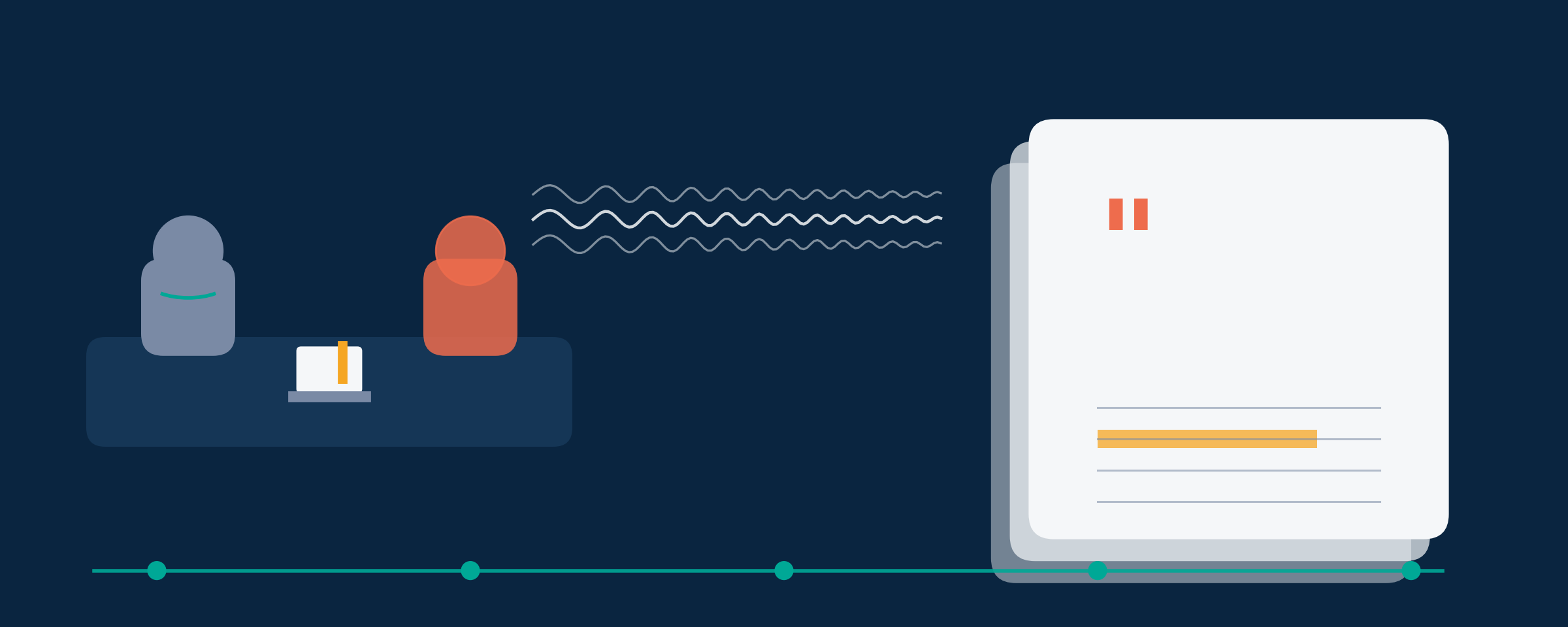
The surveyors take notes through all of it. Those notes feed the deficiencies written onto Form CMS-2567, the Statement of Deficiencies, each one keyed to an F-tag. You are quoted, but almost never word for word. Your ten-minute account of a resident's fall-risk workflow — the assessment, the care-plan entry, the alarm that was in place — becomes one paraphrased line about what your DON "confirmed."
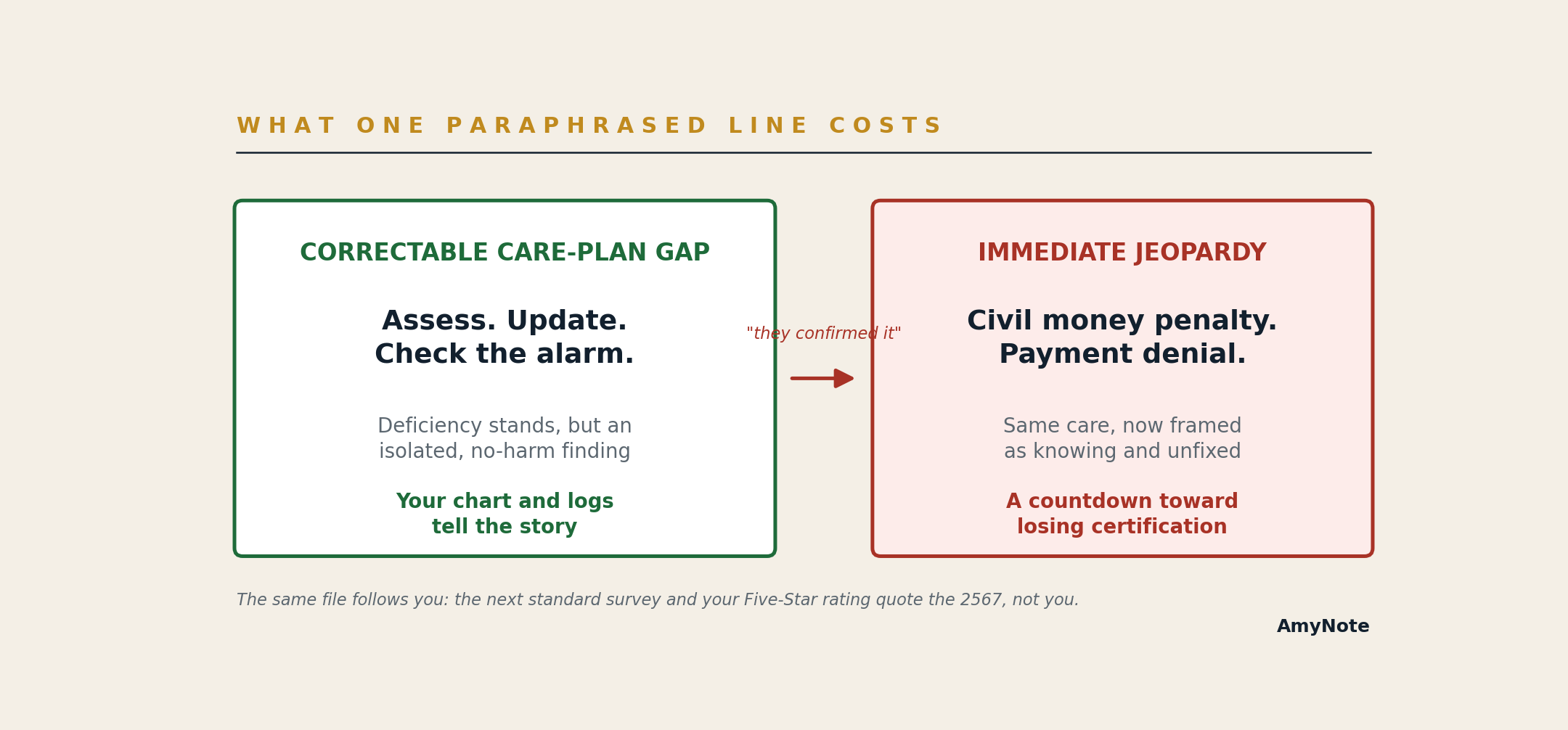
That line carries enormous weight. It is the difference between an isolated, no-harm deficiency and an Immediate Jeopardy tag, the finding that can trigger civil money penalties, a denial of payment for new admissions, and a countdown toward termination from Medicare and Medicaid. An Immediate Jeopardy characterization reframes everything else in the report: reviewers stop reading a fixable care-plan gap and start reading a facility that put a resident in serious harm's way.
You never receive a transcript. There is no recording of the interview. When you write your plan of correction, you are arguing against the agency's paraphrase from memory — and memory is exactly what a four-day survey erodes.
Why Current Solutions Fail
Memory fails first. A four-day survey covers dozens of exchanges at the nurses' station, in resident rooms, and in the conference room, and your team was delivering care, not documenting who said what. By the time the 2567 arrives, the exact wording of a second-day exchange about a care-plan update is already gone.
Handwritten notes are partial. Even when your administrator or a consultant shadows the survey, they capture themes, not exact words. An Immediate Jeopardy fight turns on precise phrasing about what staff knew, when they knew it, and what they actually did — the difference between "the alarm was in place and the assessment was current" and "staff failed to implement the intervention." One is a defensible record; the other is a tag. Handwritten notes rarely preserve which one your DON actually said.
Cloud meeting bots do not fit. A survey happens on the floor and at the bedside, and nobody invites a recording bot into a resident's room. Shipping protected health information to a server that trains on it creates an even bigger problem for a HIPAA-covered facility — a recording that leaves your control is not evidence you want to explain at the next survey.
So most facilities finish the survey with nothing but recollection, and the only detailed record of what was said belongs to the state agency.
What Actually Works: Your Own Contemporaneous Record
The facilities that respond to a Statement of Deficiencies with confidence have their own contemporaneous record of every surveyor conversation and every internal clinical meeting. Not a summary written from memory after the exit conference — a verbatim record made while the words were being said.
This is where AmyNote fits. It runs on your own device and captures in-person conversations directly, with no bot joining anything and no one else notified. Transcription runs through the OpenAI Speech API, and analysis runs on Anthropic's Claude models, which can surface every question the surveyor asked, every answer your staff gave, and every clinical fact stated at the nurses' station — the same day, while your correction window is still open.
The privacy architecture matters in exactly this scenario. Both OpenAI and Anthropic contractually guarantee zero training on user data. Audio is encrypted in transit and not retained after processing. Transcripts are stored locally on your device with end-to-end encryption, so your record of a federal survey stays yours.
Why this changes outcomes:
- Paraphrase versus quote. When a 2567 says your DON "confirmed" staff skipped the intervention, your verbatim transcript shows the assessment, the care-plan entry, and the alarm the note left out.
- Correction quality rewards proof. A plan of correction and any informal dispute resolution live or die on evidence. A same-day record of exactly what was discussed is that evidence — not an assertion your team makes weeks later, but a record made on the floor.
- The file resurfaces. The 2567 follows your facility into the next standard survey, your Five-Star rating, and any enforcement action. Your transcript of the same conversation is the counterweight when a reviewer reaches for the old file.
An Immediate Jeopardy tag can turn a correctable care-plan gap into six-figure penalties and a direct threat to your certification. The evidence deciding it is often one sentence of paraphrase — and whether you have a better record than the state agency's.
Getting Started
A practical sequence most facilities can adopt before their next survey:
- Capture your clinical meetings now. Record your QAPI reviews, care-plan conferences, and incident debriefs, so your team describes the same fall-risk and care-plan process the same way under pressure.
- Record survey conversations where policy allows. Confirm your facility's policy and applicable consent rules with counsel first; in many settings your own participation in the conversation is enough.
- Summarize the same day. Have the AI pull out every question the surveyor asked, every answer your staff gave, and every clinical fact stated at the nurses' station, while the details are fresh and your correction window is still open.
- File the record with the survey documents. When the 2567 and F-tags arrive, comparing your transcript to the agency's paraphrase takes minutes, not memory — and gives your plan of correction its strongest evidence.
Start before the surveyors reach the lobby, not after the 2567 issues. Use AmyNote to capture your clinical meetings and quality-assurance reviews, then every survey conversation where policy allows, and have it summarize the commitments the same day. When the deficiencies come back with your words rearranged, you will be the rare facility holding a better record than the state agency. AmyNote at amynote.app offers a 3-day full trial with no credit card.
Originally published as an X Article by @AmyNoteApp.